In today’s fast-moving business world, keeping your operations smooth while creating a productive environment is a challenge. That’s where professional facilities management services help. They give businesses a competitive edge, support sustainability goals, and shape spaces that inspire confidence in employees, clients, and visitors.
Ever wondered how companies keep their facilities running perfectly every day?
Key Takeaways
See how facilities management improves safety and day-to-day efficiency
- Learn how smart planning saves money and resources
- Explore the many facilities management services available
- Get insights from real-world case studies
- Understand trends shaping facilities management in the UK
The Importance of Facilities Management

Facilities management is vital for success. It keeps your business infrastructure working as one. It goes beyond fixing problems—it’s about avoiding them in the first place. As a key organisational function, it brings together people, processes, places, and technology.
Strong building maintenance plans extend the life of your assets and cut repair costs. They also support safety, legal compliance, and business continuity planning.
In today’s competitive environment, businesses must ensure resilience. Robust facilities management plays a pivotal role in ensuring site operations stay uninterrupted, even during challenges such as natural disasters or supply disruptions. This strengthens your business continuity planning while building confidence among stakeholders.
When a facility runs smoothly, employees feel more motivated. Clean, well-organized spaces improve focus and reflect positively on your brand.
Smart facilities management also boosts cost control and resource use. Streamlined systems help your business become more efficient and prepared for growth.
What Facilities Management Services Include
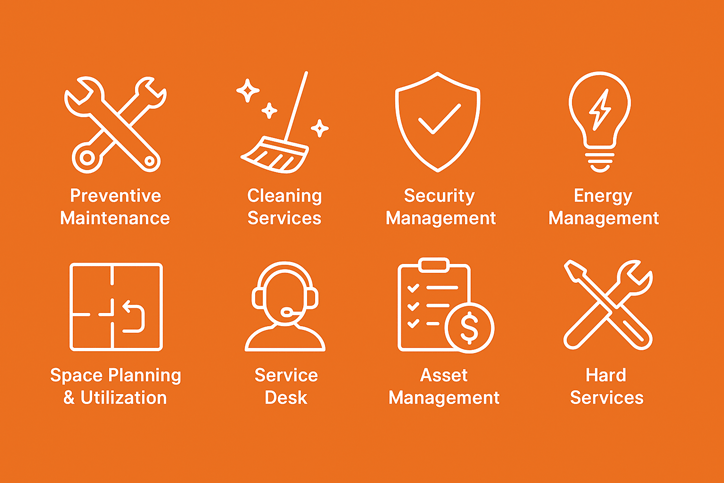
Facilities management services are tailored to suit your needs and can include:
- Preventive Maintenance – Catches issues early to avoid major disruptions
- Cleaning Services – Keeps spaces hygienic and welcoming
- Security Management – Protects people and property
- Energy Management – Cuts utility bills and supports sustainability
- Space Planning – Makes better use of your workspace
- Service Desk – Handles all requests in one place
- Asset Management – Maintains and tracks your business assets
- Hard Services – Covers plumbing, fire safety, electrical systems, and HVAC
- Project Management – Manages upgrades, refurbishment, and compliance tasks
Whether you’re managing a single site or multiple locations, integrating all services through a total facilities management approach ensures consistency and efficiency. This unified model reduces complexity and supports better decision-making across departments.
These services work together to support efficiency, safety, and growth.
Real-World Case Studies

At One Croydon—famously known as the “50p Building”—a major hard services fire safety upgrade was delivered by Global Facilities Management. The 24-storey, high-occupancy building required a phased approach to replace 207 fire doors and complete over 2,000 fire-stopping works. Despite the scale and complexity, the project was executed with minimal disruption to tenants. The result: enhanced fire resistance, improved occupant safety, full regulatory compliance, and cost savings through efficient planning and execution.
What’s Next for Facilities Management in the UK
The future of facilities management is smart and green. Tools like AI, sensors, and automation are changing how companies manage spaces.
With the UK aiming for net zero, many organisations now focus on eco-friendly practices—such as energy-efficient lighting and recycling programs.
As laws change, staying compliant is key. Trained facilities management experts can help businesses adapt quickly.
Groups like the institute of workplace help shape standards in workplace and facilities management, pushing innovation across the industry.
Building the Right Team
Strong teams start with smart hiring. You need people who are detail-oriented and proactive.
Ongoing training helps teams stay updated with best practices and new tech. Clear communication and tracking systems make daily work smoother.
A supportive culture improves performance. Career paths in facilities management are growing fast, with partnerships with universities offering specialist education.
Partnering with a trusted facilities management company can also give your team access to mentoring, apprenticeships, and on-the-job learning. These professional development opportunities improve staff retention and strengthen your internal capability.
Innovations, Insights and News

Innovation is at the heart of modern facilities management. Real-time data from IoT and AI now guide decisions and improve results.
Hybrid work trends have made flexible spaces a must. Companies are rethinking layout design to support both remote and office work.
Eco-friendly practices are also rising. From smart HVAC systems to green cleaning, businesses are working toward a cleaner future.
There’s a growing trend toward using data analytics in project management to predict needs and allocate resources effectively. Meanwhile, leading facilities management companies are also adopting digital service platforms that connect the service desk with mobile teams, streamlining issue resolution in real time.
The demand for total facilities management and integrated FM services is growing. Companies now handle everything from core tasks to specialist areas in-house. There’s also a stronger focus on the supply chain and giving back to local communities.
Creating A Better Workplace Environment

Good facilities management isn’t just about systems—it affects people. Clean, well-lit, and organized spaces make staff feel valued.
Inclusive design is gaining traction, ensuring places of work are welcoming for all. Simple additions like adjustable desks and quiet zones can dramatically improve how employees interact with their workplace and facilities management environment.
Ergonomic designs, air quality, and lighting all impact well-being. Reliable maintenance cuts down disruptions and keeps teams working smoothly.
Flexible spaces help meet diverse needs. With the right refurbishment strategy, businesses can create better, more inclusive work environments.
The Human Element

Even with all the tech, facilities management is still human at its core. Great service delivery includes empathy, clear communication, and a personal touch.
The most successful providers blend smart systems with people-first values. Whether it’s handling a maintenance request or a large refurbishment, attention to detail and care drive better outcomes and greater satisfaction.
When teams listen and act on user needs, trust builds. Strong partnerships create long-term value for everyone involved.
Conclusion
Facilities management services provide real value—cutting costs, improving spaces, and supporting staff.
As tech and sustainability take center stage, a clear facilities management strategy will help your business stay ahead.
Ready to improve your workplace through professional facilities management? Let’s start that conversation today.
Frequently Asked Questions
It’s a set of services that support smooth business operations—like cleaning, security, maintenance, and energy use.
They improve efficiency, cut costs, boost staff performance, and help meet legal and safety standards.
Services range from cleaning and maintenance to asset management, security, and more.
Look for proven experience, a broad service range, reliability, and alignment with your business goals.
Yes. They reduce waste, cut energy use, and support your business on the path to net zero.