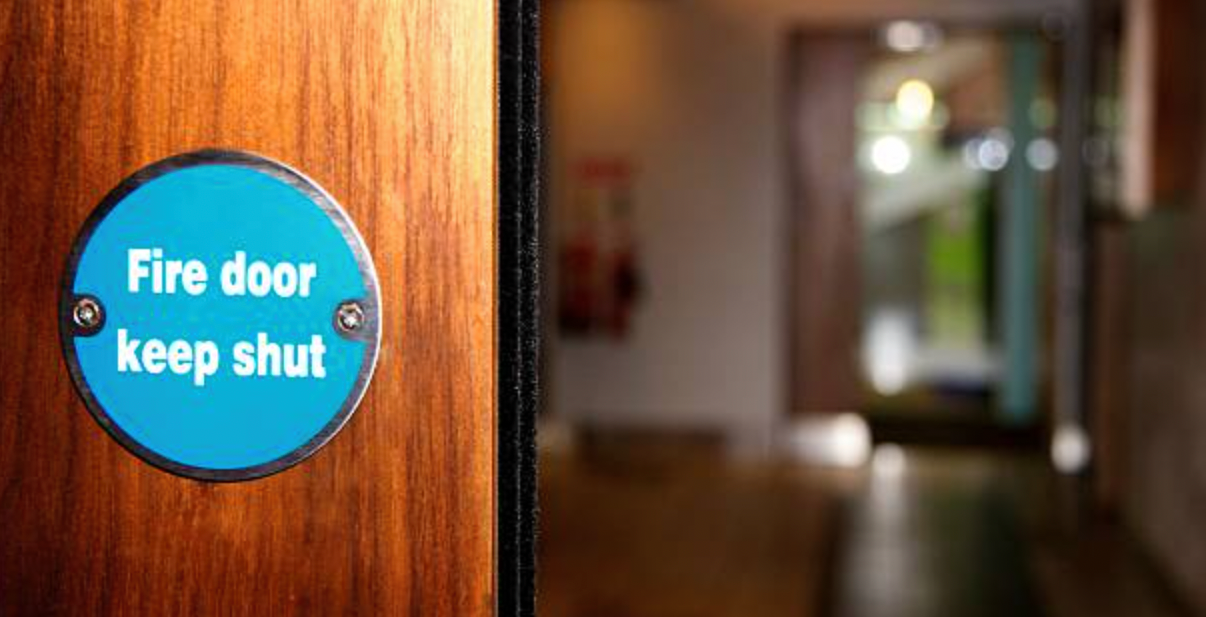
Did you know there were 33,180 house fires in UK households last year? In an attempt to reduce this figure, the UK government have introduced new regulations that came into effect in 2023. In this blog, we’ll be taking a look at fire door regulations, as well as what they’re made from and why they’re required by law.
What Are Fire Doors?
Fire doors are an important part of any building’s fire safety system. They are designed to contain fires and limit the spread of smoke and toxic gases for as long as possible, providing a safe escape path for occupants. Fire doors consist of solid-core or hollow-core components tested and certified to meet specific fire safety ratings. Fire doors are typically made from metal alloys or wood but may also be constructed from a combination of materials such as fire-resistant glass and masonry.
In addition to their primary purpose of containing fires, fire doors can provide acoustic insulation, security benefits, and even aesthetic appeal to a building’s interior design. Depending on the type of opening, fire doors can be equipped with various features, such as automatic door closers and panic hardware, to ensure that they remain securely closed in the event of a fire. Fire doors are required in many commercial and public buildings, including hospitals, schools, universities, government buildings and industrial complexes.
How Do You Identify A Fire Door?
One of the easiest ways to identify a fire door is by checking the edge of the door by the hinge. Here you’ll likely find a metal identification tag that states the type of fire door, the fire rating and how long it will prevent fire and smoke from passing through into the rest of the building.
If the door has been checked as part of the fire door inspection scheme, the identification tag will be signed and dated to indicate an accredited fire door inspector has checked it. You may also find a sticker indicating the door conforms to British Standards 476: Part 22 or meets the EN 1634-1 standard for use in fire separations in buildings.
What Are The Different Types Of Fire Doors?
Fire doors come in different shapes and sizes. Let’s take a look at them:
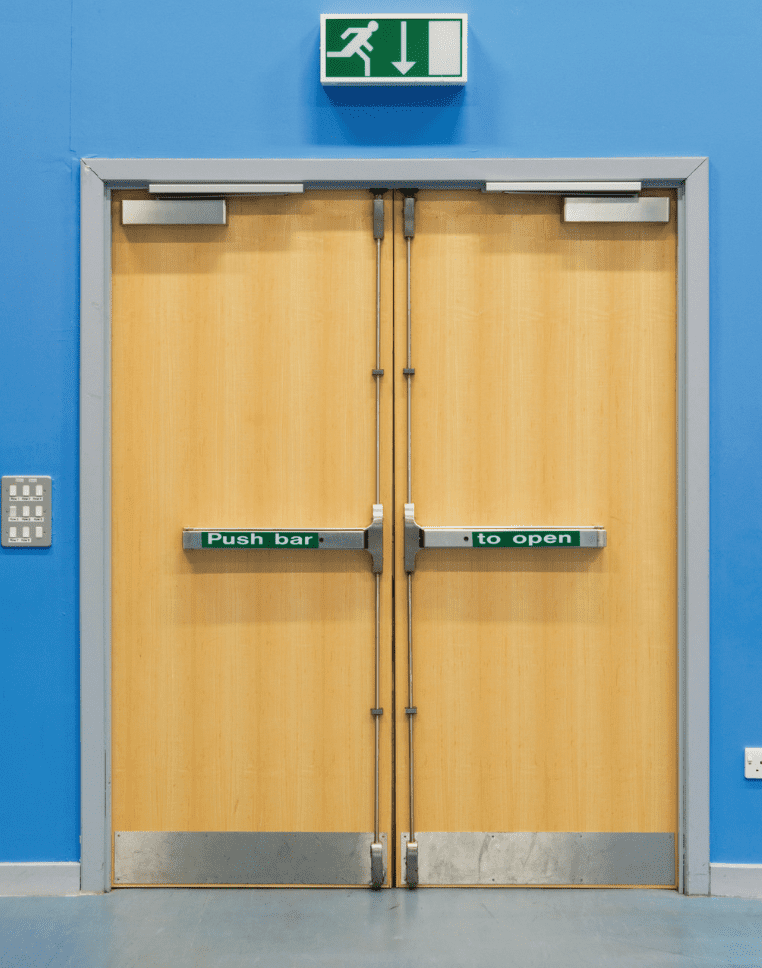
Double Fire Doors
This type of fire door is typically installed in the corridors of large buildings, e.g. schools, hospitals and hotels. They’re also usually located by emergency exits and are a popular type of fire door.
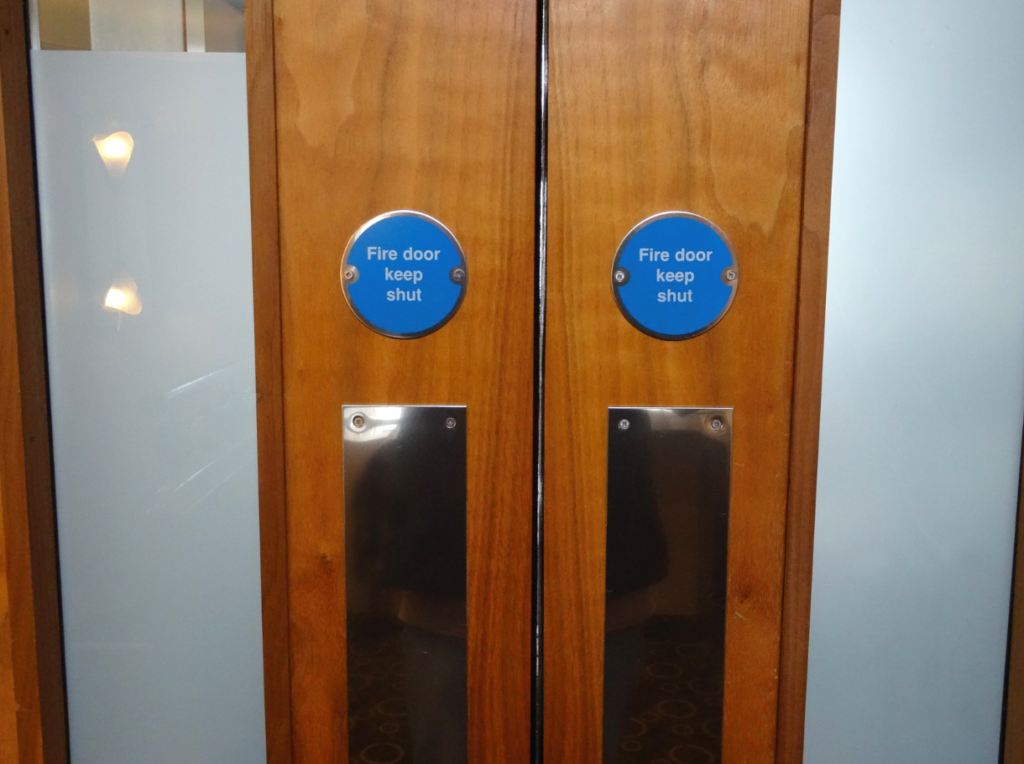
Glass Fire Doors
Glass fire doors are composed of many layers of fire-resistant glass. Combined with intumescent seals, they’re a less popular alternative to traditional wood and steel doors.
Pre-Hung Fire Doors
Pre-hung fire doors are a complete unit delivered and ready to install. The installation process is very straightforward, meaning that they’re a great option if you’re looking to comply with building regulations.
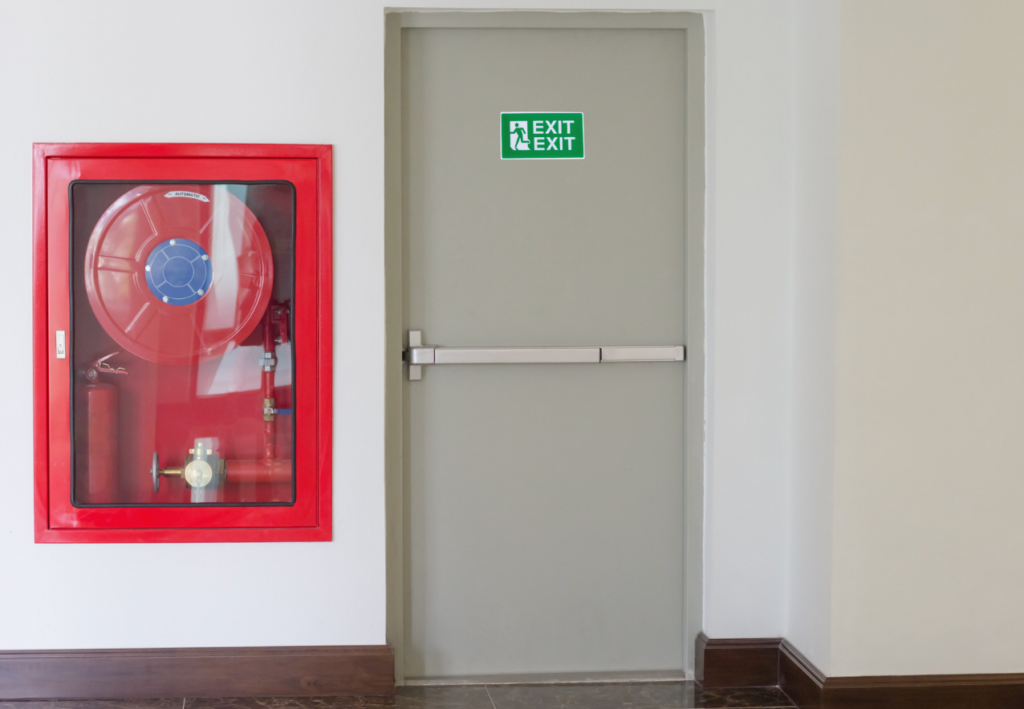
Steel Fire Doors
These can be used in both commercial premises, as well as in residential buildings. Steel doors are extremely durable and reliable, making them an ideal choice for ensuring maximum safety in case of a fire.
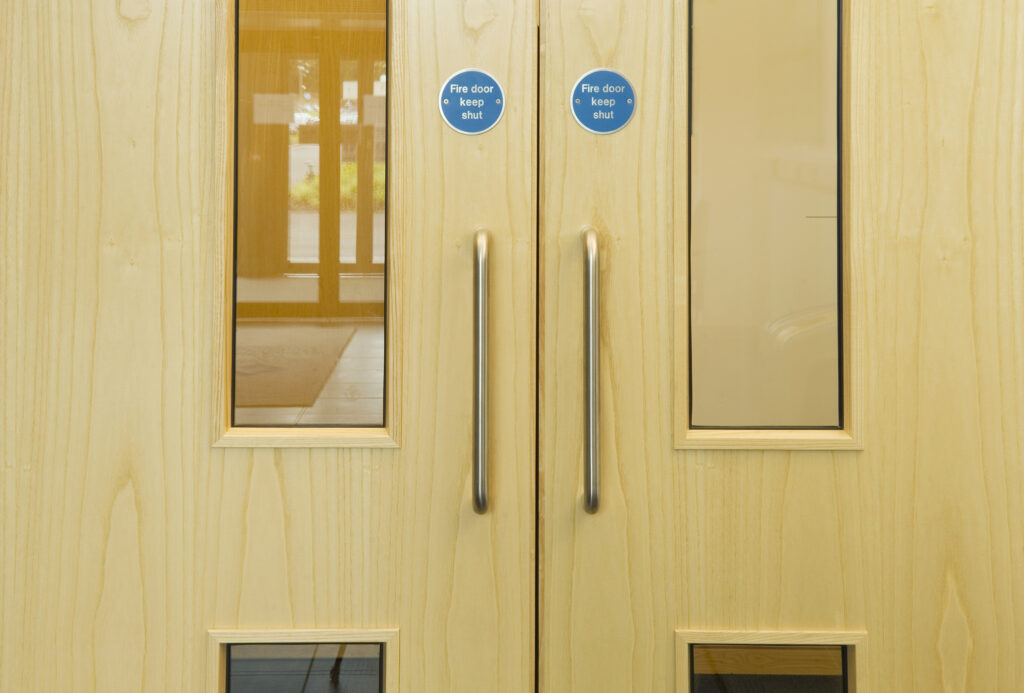
Wooden Fire Doors
Wooden fire doors are a great option for those who want to add a touch of elegance and style to their home or business. They provide excellent protection against fire while still remaining aesthetically pleasing.
What Are Fire Door Regulations?
Fire door regulations are a set of rules that must be followed when installing, maintaining and using fire doors. In the UK, fire door regulations are established by The Regulatory Reform (Fire Safety) Order 2005. This order stipulates that commercial and public buildings must have a minimum of 30 minutes of integrity and insulation in any structural elements that directly separate two compartments or floors, as well as any external walls or other openings leading to an open area.
In 2023, this was updated to state that it will now be a legal requirement to have annual checks of flat entrance doors and quarterly checks of communal doors in multi-occupied residential buildings above 11 meters. The regulations also require responsible persons to provide their residents of all multi-occupancy residential buildings with information on the importance of fire doors to a residential building’s fire safety.
Why Are Fire Door Regulations Changing?
After the Grenfell tragedy in 2017, the government recognised that there were gaps in fire safety regulations. As a result, they are introducing new and updated regulations to ensure that existing buildings have reached the current fire safety standards and have the correct fire door assembly.
The new regulation seeks to address the issue of flat entrance doors, which can be easily bypassed or deactivated by residents and visitors alike due to a lack of awareness of their importance. The regulations are also being updated to reflect the installation of advanced fire safety systems such as automated closing devices, smoke seals and self-closing doors, which can provide additional protection from the spread of fire in multi-occupancy residential buildings.
What Are The Internal And External Fire Door Regulations?
Internal fire doors are meant to divide the building into separate compartments to stop fire spreading and smoke from travelling between rooms. However, external fire doors are not needed for fire protection. Instead, they are placed at the end of an escape route and don’t have to be kept close or have fire-resisting properties.
Facilities Management Companies
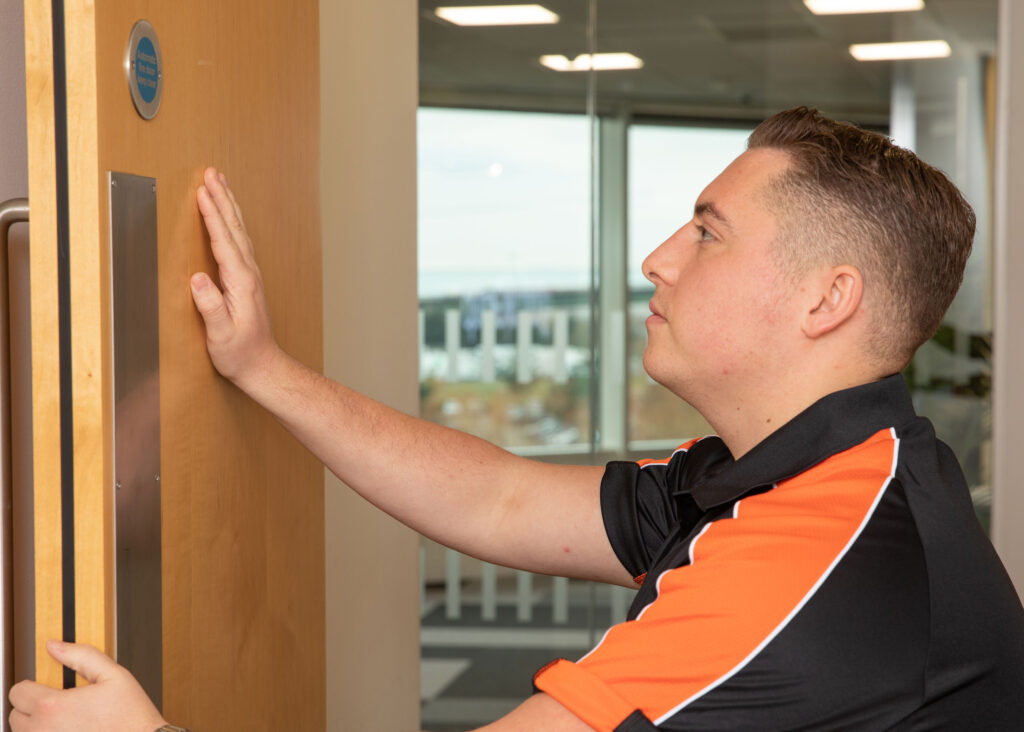
Hiring an excellent facilities management company can be beneficial in many ways if you’re an owner of a residential or commercial building. They will be able to ensure that the building complies with the fire door regulations and provide a range of other services such as general maintenance and health and safety checks. They can also advise you on maintaining fire doors, including fire door assemblies and checks. Here at Global Facilities, we have a highly experienced team of professionals that can ensure your building is compliant with fire door regulations. Contact us today to find out more.
Conclusion
Fire doors play a huge role in proactively preventing the spread of fire and smoke and providing a safe means of escape for occupants. It’s important to ensure that your fire doors are installed professionally and comply with the relevant regulations. By following these guidelines and finding a reliable facilities management company, you can ensure that your building is up to code and that everyone inside will be safe in the event of a fire.
We hope this guide has helped you learn more about fire door regulations and why staying compliant is important. Remember, a properly installed and maintained fire door is vital for the safety of your building and its occupants. For any questions or queries regarding fire door regulations, don’t hesitate to contact us here at Global Facilities today. We’d be happy to provide advice and assistance with any fire door-related needs you may have.
Looking for a clear, up‑to‑date explanation of UK fire door regulations? This guide focuses on what the law actually requires, who is responsible, how often doors must be checked, and the practical steps to stay compliant. It’s written for building owners, managing agents, facilities managers and compliance leads.
Quick Summary
- Core law: Regulatory Reform (Fire Safety) Order 2005 (the Fire Safety Order).
- Clarification: Fire Safety Act 2021 – confirms flat entrance doors are in scope of the Fire Safety Order.
- Routine checks: Fire Safety (England) Regulations 2022, Regulation 10 – requires specific resident information and regular fire‑door checks in certain residential buildings (details below).
- Design/installation standards: Approved Document B for new work; BS codes (e.g. BS 8214, BS 9999/9991) for best practice.
Bottom line: Keep existing fire doors in good repair and working order; carry out checks at the required intervals; document what you’ve done; and act promptly on defects.
What counts as a fire door (and a doorset)?
- A fire door (or fire doorset) is a tested assembly designed to resist fire and smoke for a stated period (e.g. FD30/FD60).
- Treat the door, frame, glazing, seals, hinges, closer, latch and signage as one system. If you change any part, you may affect its performance.
Who is the Responsible Person?
Under the Fire Safety Order a Responsible Person (RP) must ensure suitable fire precautions, including the maintenance of fire doors. In practice, this is usually the owner, employer, landlord, head‑lessee, or managing agent in control of the premises/common parts. Duties can be shared, but legal accountability remains.
Fire Door Regulations by building type
Non‑domestic buildings (workplaces, public buildings)
- Fire doors form part of your general fire precautions under the Fire Safety Order.
- You must maintain them so they work as intended, with checks at sensible intervals based on risk and usage (high‑traffic doors need more frequent checks).
- New work and refurbishments should follow Building Regulations (Approved Document B) and relevant British Standards.
Blocks of flats and mixed‑use with common parts (England)
Two key duties apply under Regulation 10 of the Fire Safety (England) Regulations 2022:
Resident information – all blocks with common parts
You must tell residents that fire doors should be kept shut, self‑closers must not be tampered with, and faults must be reported. Provide this when residents move in and at least every 12 months thereafter.
Routine fire‑door checks – buildings with top storey over 11 m
If the building’s top storey is above 11 m (typically 5+ storeys):
- Communal area fire doors: check at least every 3 months.
- Flat entrance doors: use best endeavours to check at least once every 12 months (inside and out).
- Keep a record of checks, attempts to gain access, findings and any actions taken.
Important: Regulation 10 does not require older doors to be upgraded to today’s new‑build standards if they remain undamaged, close effectively and are adequate for risk. Your fire risk assessment determines when replacement is necessary.
How often should fire doors be inspected?
- Legal minimums (where applicable): as above for buildings >11 m (quarterly communal, annual flat doors).
- Best practice elsewhere: At least 6‑monthly inspections across most premises, with more frequent checks for high‑use/high‑risk doors (e.g. hospitals, student blocks, schools).
- Ongoing local checks: caretakers/FM teams should perform simple monthly visual checks of communal doors to catch obvious defects early.
What to check (practical checklist)
Use this list for routine visual checks and to brief caretakers. A competent, documented inspection should go further, but never ignore these basics:
- Closes fully on the latch from any angle using its self‑closer; no wedging/propping.
- Gaps: generally ≤ 4 mm around the sides/top; minimal at threshold (door mustn’t snag).
- Seals: intumescent/smoke seals intact, continuous, not painted over, making contact.
- Hinges/ironmongery: fixed tight with all screws, no damage, appropriate grade.
- Glazing & vision panels: intact, correctly beaded, no cracks; compatible fire‑resisting glass/system.
- Leaf & frame: no warping, splits, damage or unapproved alterations (letterboxes, viewers).
- Signage: mandatory Fire door keep shut/locked signs present where required.
- Certification/ID: where present, labels or plugs legible; retain evidence in your asset register.
- Environment: door route clear; no carpets or flooring changes fouling the swing/closing.
If any item fails, log it and raise a work order. Repairs and replacements should be done by competent and preferably third‑party‑certified contractors.
Documentation you should keep
- Fire risk assessment (showing doors are suitable/adequate).
- Asset register of fire doors (location, rating, components, IDs).
- Inspection records (dates, person, findings, photos).
- Maintenance & remedial records (what was fixed/replaced, evidence of competence).
- Resident communications (dates/methods, especially for annual reminders).
- Access attempts for flat door checks (where entry wasn’t possible).
Common compliance pitfalls (and how to avoid them)
- Self‑closer doesn’t fully latch → adjust/replace closer, check hinges and latch alignment.
- Excessive gaps → refit/plane/pack as per manufacturer’s evidence; avoid DIY fixes that void certification.
- Painted‑over seals or labels → replace seals; keep ID plugs/labels visible.
- Unapproved letterboxes or viewers → verify compatibility and fit by competent persons.
- Worn or mismatched ironmongery → use evidence‑backed components (hinges, latches, intumescent pads).
- No records → if it isn’t written down, it didn’t happen; implement a simple log template today.
When do doors need replacing?
Replace where the door cannot be restored to safe function (e.g. severe damage/warping), if self‑closing cannot be reliably achieved, or where your risk assessment finds performance is inadequate for the use and risk. Replacement should be a tested doorset installed by competent fitters in line with the manufacturer’s instructions and relevant standards (e.g. BS 8214).
How Global Facilities can help
How Global Facilities can help
Fire door inspections – competent, documented surveys with photographic evidence and actionable remedials.
Remedial maintenance & upgrades – seals, closers, glazing, ironmongery, re‑hanging and full doorset replacement.
Compliance admin – asset registers, inspection schedules, resident communications templates, KPI dashboards.
Book an fire door inspection
Get a quote for fire door maintenance
This guide is for general information only and does not replace a site‑specific fire risk assessment or legal advice.
Frequently Asked Questions
Yes—under the Fire Safety Order you must maintain fire doors so they work; for relevant residential buildings with a top storey above 11 m, Regulation 10 sets minimum check frequencies (quarterly communal; annual flat doors using best endeavours). Many RPs adopt 6‑monthly competent inspections as baseline best practice.
Not necessarily. If the door is undamaged, closes effectively and remains adequate for risk as per your fire risk assessment, wholesale replacement isn’t automatically required. Replace where inadequacies or irreparable defects are found.
Simple visual checks can be done by trained caretakers/FM staff. Repairs, adjustments and replacements should be carried out by competent specialists, ideally with third‑party certification.
Keep a paper trail: risk assessment, door asset list, inspection/maintenance records, resident communications, and access attempts.
Fire doors should be checked regularly to ensure they are in good condition and damage-free. They must also be kept closed while not in use, and the seals around the door must remain intact.